

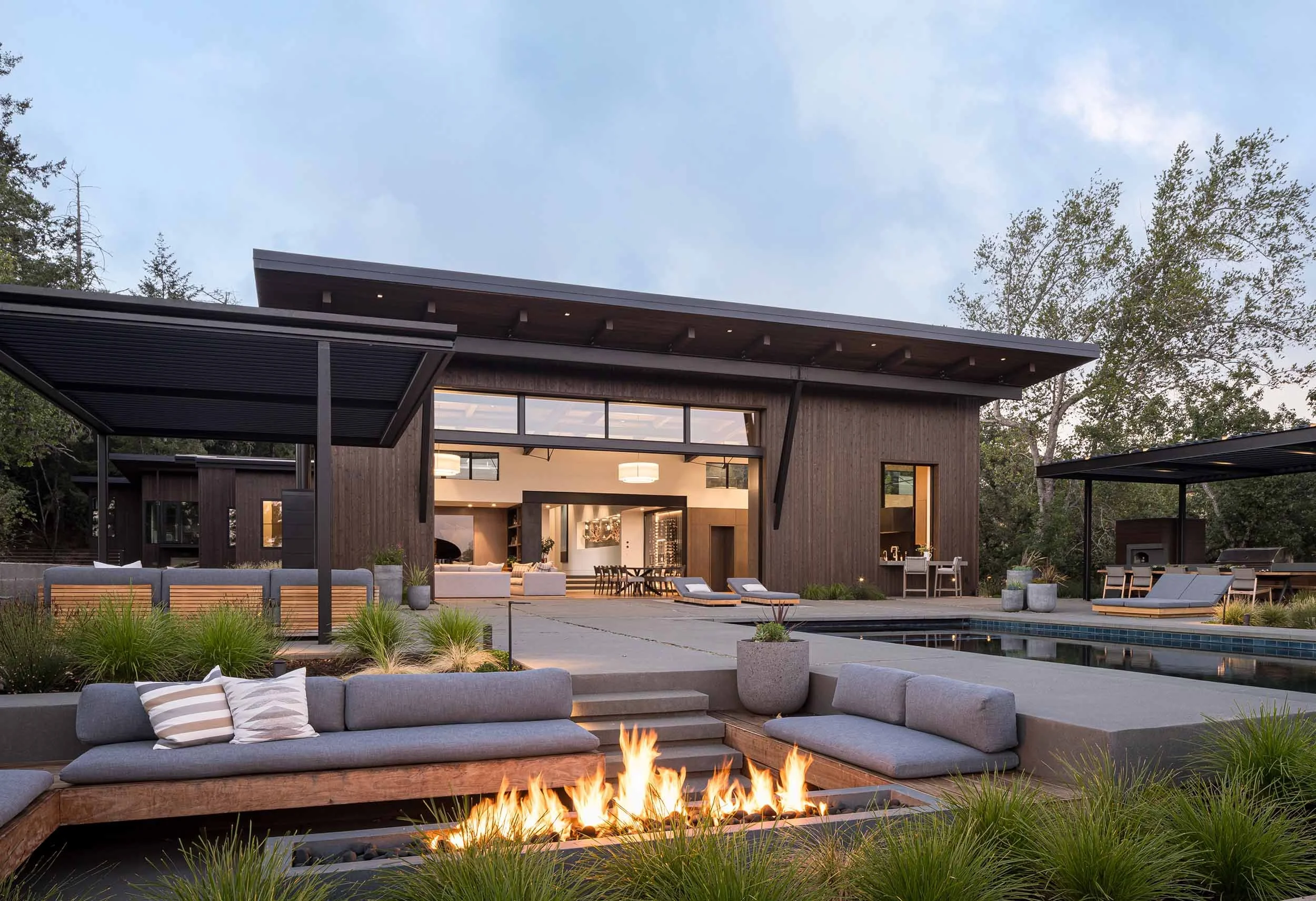
Fire-Resistant Architecture in California
Fire-Resistant Requirements can Elevate Architectural Language
In California, fire-resistant home design is a rigorous architectural standard focused on creating exceptional and resilient structures. These standards are enforced in the Wildland-Urban Interface (WUI)—zones where residential development meets fire-prone natural vegetation—and are governed by Chapter 7A of the California Building Code (often referred to broadly as the California Fire Code) in coordination with CAL FIRE.
At Holder Parlette, we view WUI compliance as a positive design influence; it is a standard we would want to achieve even if the codes didn’t exist. Integrating fire resilience into our projects actually expands our modern aesthetic. Our WUI-compliant designs seamlessly blend strict site planning requirements and structural safety with the clients' desires and our contemporary design philosophy.
Drawing from our many years of designing homes within California’s high-risk zones, we reduce fire vulnerability by utilizing high-performance, ignition-resistant materials. These can serve elegantly as visible design features or remain hidden as an underlying substrate. Overcoming other critical design challenges—such as eliminating vulnerable entry points for wind-blown embers and designing smart, defensible space landscaping—allows us to build beautiful, sustainable sanctuaries engineered to withstand wildfire conditions throughout California.
Can I build my dream home and get it covered by insurance?
You can build a custom luxury home in California and secure insurance coverage by designing beyond standard building codes. To build for insurability in high-risk WUI (Wildland-Urban Interface) zones, a home must be engineered with "passive resilience."
Holder Parlette creates invisible systems of resistance by utilizing an organic and sophisticated palette of non-combustible materials that shield the home while enhancing its architectural integrity and aesthetic. This involves integrating strict fire-hardening standards: an ignition-resistant structural envelope, specialized ember-safe venting, and a non-combustible Zone 0 perimeter spanning the first five feet from the foundation.
How do I Build a WUI-Compliant Home in California?
To build a fire-resistant home in California, you must design a "hardened" structure compliant with Chapter 7A of the California Building Code. The process requires combining a Class A non-combustible roofing assembly, ASTM E2886-certified ember-resistant vents, and multi-paned tempered glazing with a strict, five-foot Zone 0 non-combustible perimeter. This comprehensive approach mitigates the three primary wildfire vectors: flying embers, radiant heat, and direct flame contact.
At Holder Parlette, we are a hybrid of highly creative architects who possess an equal passion for the technical side of architecture. We work closely with our clients to guide them through compliance during the design phase, setting clear expectations for municipal reviews, and managing regulatory complexities. The result is a beautiful, fully WUI-compliant sanctuary that seamlessly blends rigorous safety with your aesthetic.
What are WUI requirements?
The WUI Code for California addresses fire-resistant construction and design standards for homes being built in fire-prone areas.
These mandatory building standards are engineered to prevent structural ignition from wind-blown embers, radiant heat, and direct flame contact.
Under the current California Wildland-Urban Interface Code (CWUIC), Title 24, Part 7, all new construction and significant retrofits in designated Fire Hazard Severity Zones must utilize California State Fire Marshal-approved materials for the entire exterior envelope. This includes:
Class A roofing
Tempered glazing
Specialized flame- and ember-resistant vents.
FIRE-SAFE (WUI COMPLIANT) PROJECTS
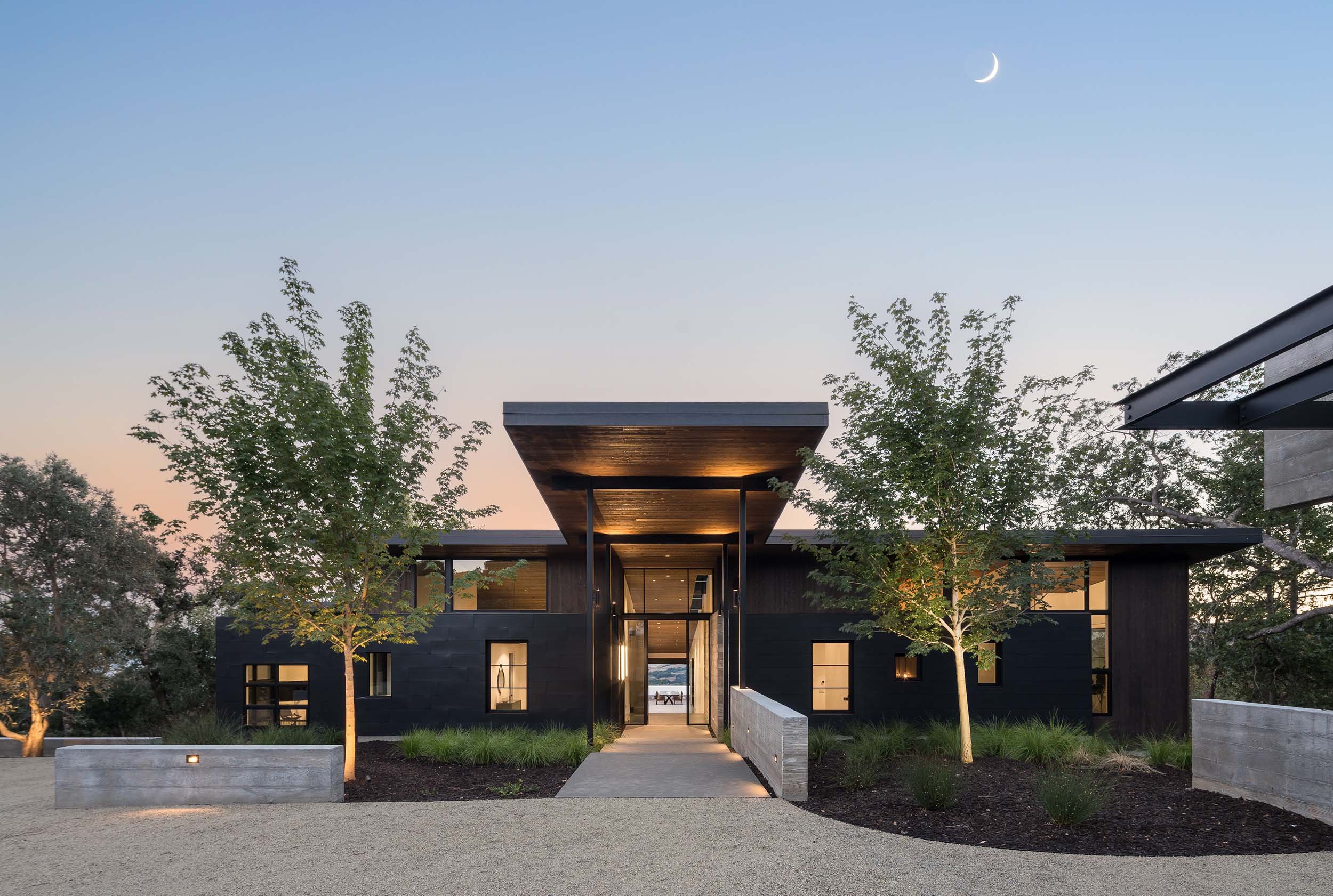
SONOMA, CAThis was built on a ridgetop site with extreme wind-driven ember vulnerability.
We used an agrarian material palette of concrete and metal, wrapping a "central spine" of the home in non-combustible textures that mimic the landscape.

NAPA VALLEY, CAThe challenge was balancing the "Modern Farmhouse" aesthetic with 2025 Title 24 mandates.
We integrated 'Fire Safe' DensGlass board behind all wood siding and utilized gravel perimeters as sculptural defensible space.

MILL VALLEY, CAThe home is set at the base of Mount Tamalpais, a heavily-wooded open space.
We used class 1 fire-rated backer board behind all wood siding, finished cement board paneling in garage and connected guest house, and fireproof composite shingles on the roof.
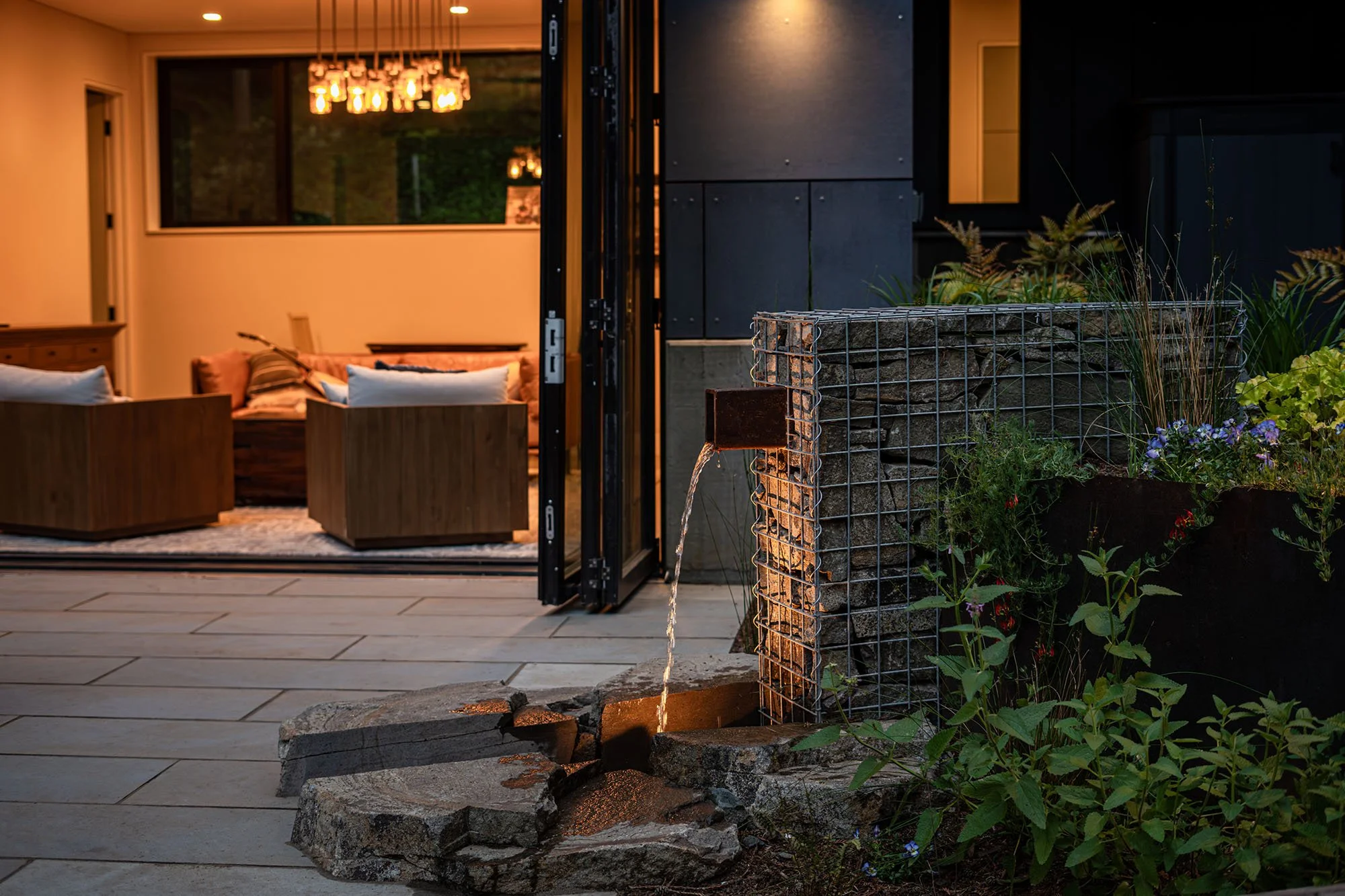
WOODSIDE, CAThis home is set in a redwood-dense site and required updating the 1980s home to current WUI standards.
We replaced original shingles with fire-resistant cement board and metal siding, allowing the home to sit safely amidst the dense redwoods.